


-
 Accueil
>
Accueil
>
- 1914, the terrible year >
- War on war >
- Antimilitarism as a response to an unavoidable war

Antimilitarism as a response to an unavoidable war
The geo-political situation at the start of the 20th century led Europe almost inexorably into war. The Moroccan and Balkan crises exacerbated Franco-German antagonism, amplified by France’s feeling of revenge, nurtured since the 1870 defeat and the trauma ensuing from the loss of Alsace-Lorraine.
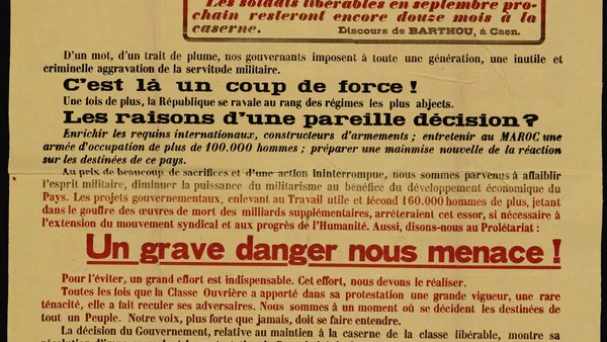
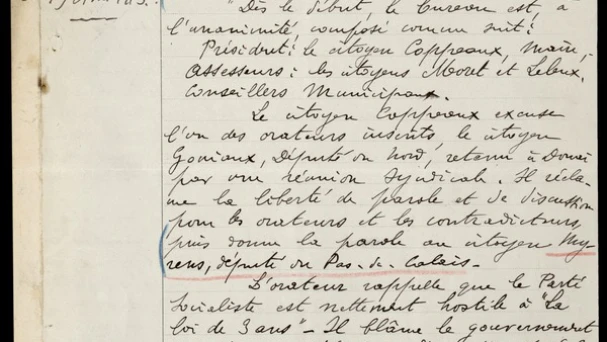
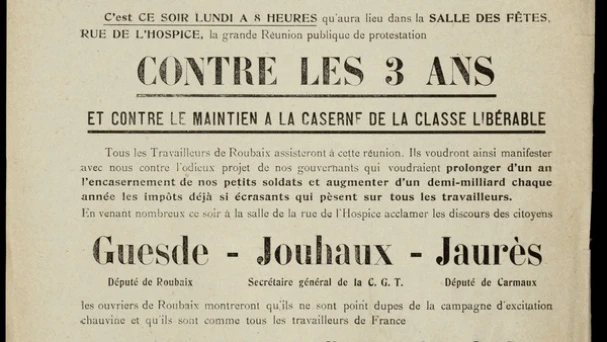
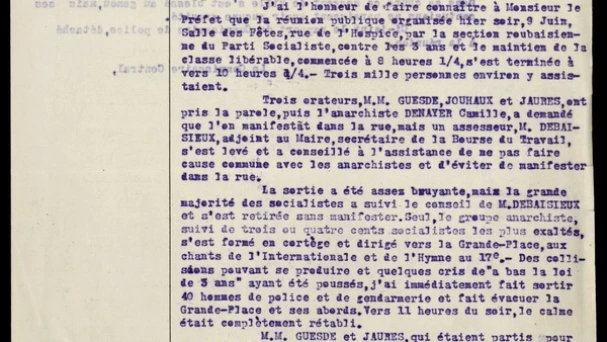
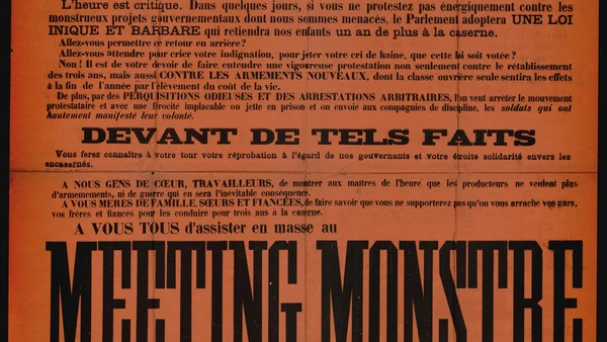
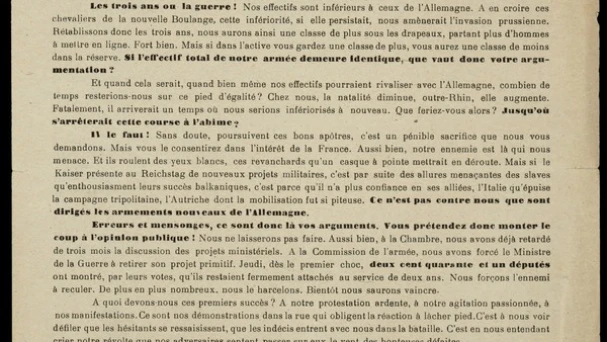
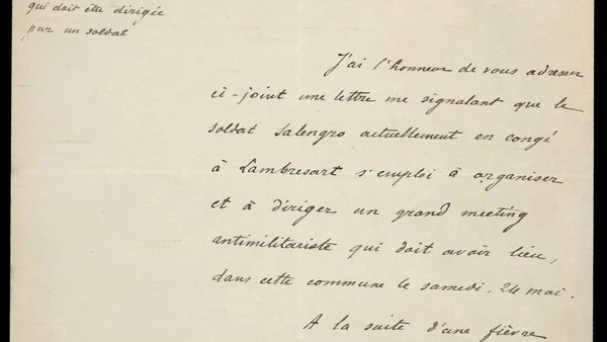
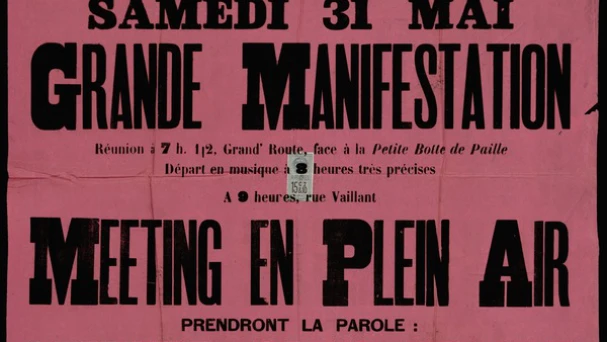
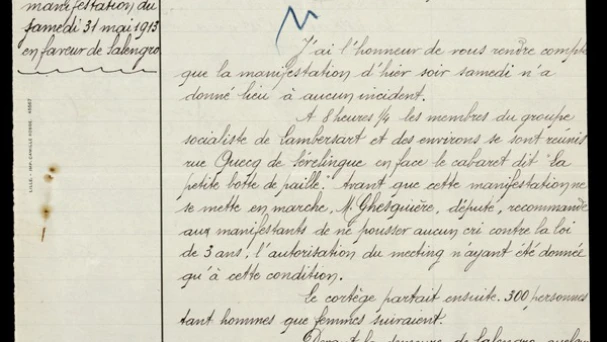
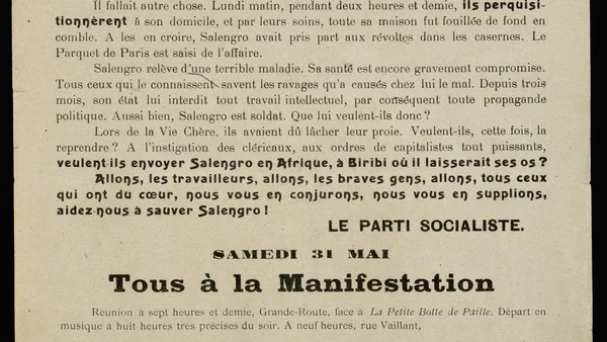
It is in this context that the Three year law was voted in on July 19, 1913. Military service was extended from 2 to 3 years, allowing the French army to prepare for a potential war with Germany. This law was one of the major issues of 1913. In the Nord department, hundreds of people attended public meetings and demonstrations to protest against the Three year law. There was also unrest in military barracks. General Paul Pau, who led the investigation into this wave of rebellion, blamed antimilitarist propaganda by anarchists and the General Workers’ Confederation. As a result, surveillance was stepped up and a wave of search and arrests ensued. One of the victims of this measure was Roger Salengro, who was added to the Carnet B surveillance register in May 1913, while on leave in Lambersart.