


-
 Accueil
>
Accueil
>
- 1915, RESISTANCE AND OCCUPATION >
- COLLABORATION >
- Major trials

Major trials
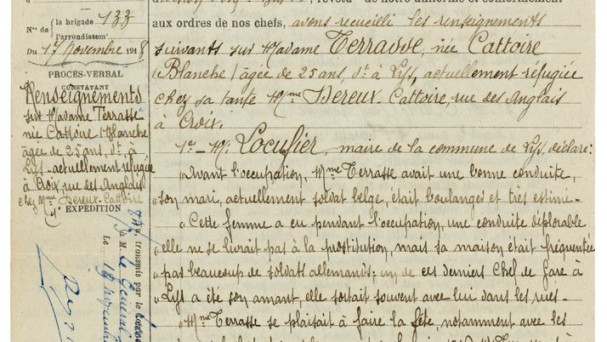
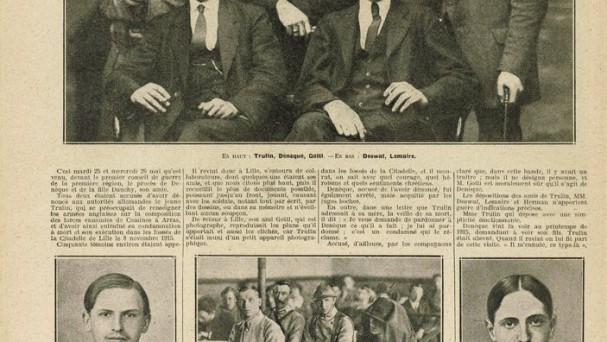
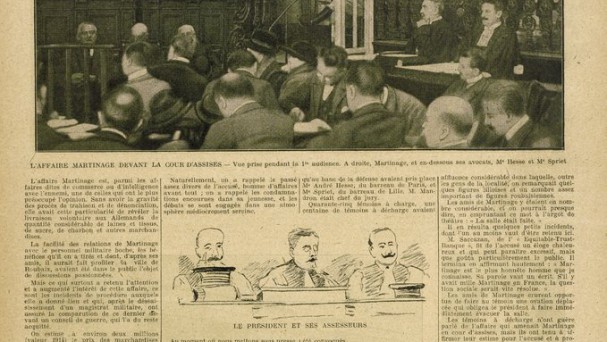
The two most widely reported trials were those of Marcel Denèque and Martinage. Marcel Denèque belonged to the intelligence network created by Léon Trulin. He was the only one to be acquitted during the trial conducted by the German army against the network. He was accused of having betrayed the members of the network to the German authorities. In 1920, he was found not guilty of denouncing Léon Trulin but was sentenced by the War Council to 20 years imprisonment for having denounced one of the network intermediaries, Mrs Cuvelier. The Denèque trial is nevertheless symbolic of the restoration of the republican order. The Martinage case had different implications. The trial was heard by the Assize Court and not, as was the case with earlier trials, by the War Council. Martinage was accused of conspiring with the enemy, for having sold significant quantities of raw materials and fabrics to the enemy. The question at the centre of the arguments, at least at the beginning of the trial, was how far the big industrialists of Roubaix, such as the Cavrois, were involved in sales and supplies to the occupiers. The Paris newspapers seized upon the question, which became a controversy. The entire first part of the trial consisted in exonerating the industrialists from any suspicion of collaboration with the enemy. Martinage had been in the know, not the industrialists. Numerous defence witnesses were then brought forward to try to exonerate the accused. In total, 83 trials for conspiring with the enemy were brought before the Assize Court of the Nord, that is to say, almost two thirds of the assizes trials held in the occupied departments. They reflect the need of the Nord Department to erase the humiliation of the occupation and to counter the suspicion of the rest of the nation.