


-
 Accueil
>
Accueil
>
- 1915, RESISTANCE AND OCCUPATION >
- OCCUPATIONS >
- Schlageter and Colpin

Schlageter and Colpin
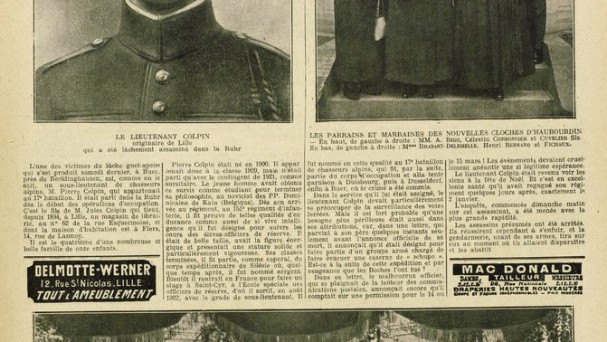
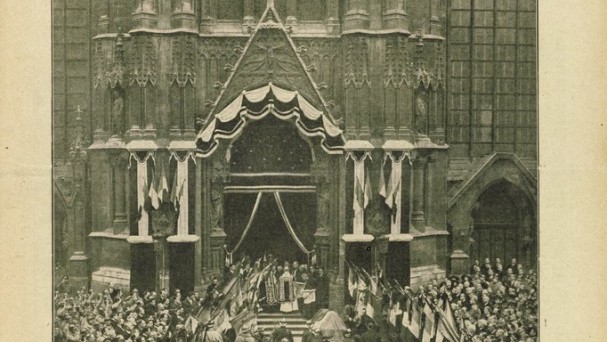
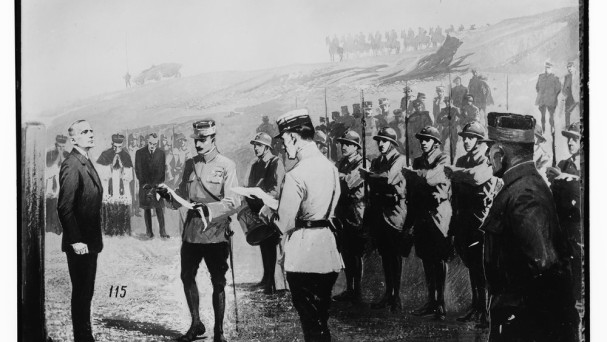
Lieutenant Pierre Colpin was among the French troops occupying the Ruhr. He was murdered, together with his officer, by a pistol shot near the church of Buer on 10 March 1923. The circumstances of his death were opaque. French and Germans alike denied responsibility. German culpability was not established. Numerous atrocities were committed in revenge by the French troops and Buer became the symbol of French brutality in Germany. Pierre Colpin’s body was returned to France. French soldiers struck civilians who failed to remove their hats as the cortege passed by. A state funeral was organised in Lille. Streets were renamed after him in the Nord Department. During the Occupation of the Ruhr by French and Belgium troops, a veteran soldier and former member of the German Freikorps, Albert Schlageter, led an illegal assault troop in Essen, as part of the Heinz Brigade. Secretly supported by the German government, he led a series of actions against coal transportations to France, at the railway station in Essen and on the Düsseldorf-Duisburg rail line. He was arrested on 7 April 1923, sentenced to death by a French military court on 9 May 1923 and executed on the morning of 26 May. His denouncer was murdered shortly afterwards by Rudolf Höß and Martin Borman. From the moment of his execution, Albert Schlageter became a hero and legend. The Communist Party sought to appropriate him with the words of Karl Radek. The Nazi Party raised him to the status of an icon of National Socialism. In 1931, a monument was erected at his place of execution. The Nazi playwright, Hans Johst, wrote a play in his memory: Schlageter.