


-
 Accueil
>
Accueil
>
- 1915, RESISTANCE AND OCCUPATION >
- OCCUPATIONS >
- The Occupation of the Ruhr

The Occupation of the Ruhr
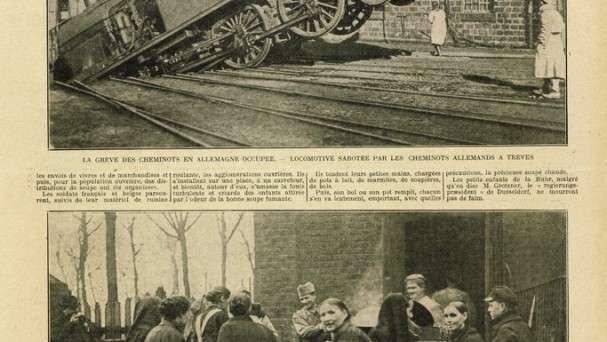
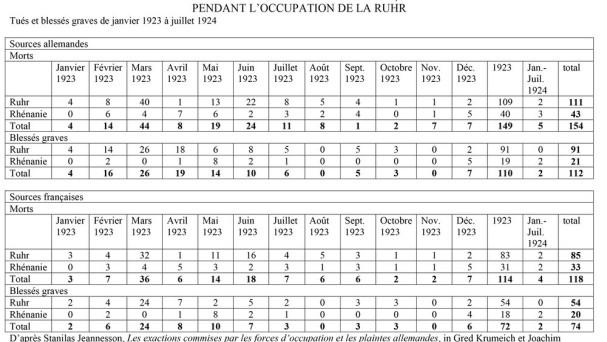
After the Armistice of 11 November 1918, the occupation of the Saar Basin and the left bank of the Rhine was regarded as a necessity by the victors. This started on 20 November 1918. Confirmed by the Treaty of Versailles, the French presence in Germany culminated in the Occupation of the Ruhr from January 1923 to August 1925. It only came to an end in 1935 with the self-determination referendum held in the Saar. In October 1919, the French army fired on protesters in the Saar, killing eight civilians. One worker, captured bearing a weapon, was condemned to death. The French occupation and the German occupation imposed the same symbolic gestures: saluting the occupier’s flag, moving off the pavement to make way for occupying soldiers, saluting officers. French time was imposed. The presence of French colonial troops from North Africa and Sub-Saharan Africa was viewed as an additional humiliation and it triggered a press campaign against the "Black Shame". The Occupation of the Ruhr was the most brutal period in the post-War confrontation between France and Germany. According to the historian, Gerd Krumeich, it was "a kind of repetition, a deformed echo of what Belgium and France had experienced under the German occupation in 1914-1918". It was accompanied by state-sponsored aggression: requisitions, expulsions, convictions, repression of strikes... and also individual acts of violence. In the Rhineland and in the Ruhr, according to German sources 87 rapes and 45 attempted rapes were perpetrated; the figures reported by French sources were 59 and 20 respectively. The number of victims of the Occupation of the Ruhr stands at 154 civilian dead and 112 wounded, according to German sources, 118 and 74 respectively according to French sources. Thousands of children were evacuated to non-occupied Germany.