


-
 Accueil
>
Accueil
>
- 1917-1918, RECONSTRUCTION >
- Political Reconstruction >
- A Revolutionary Strike

A Revolutionary Strike
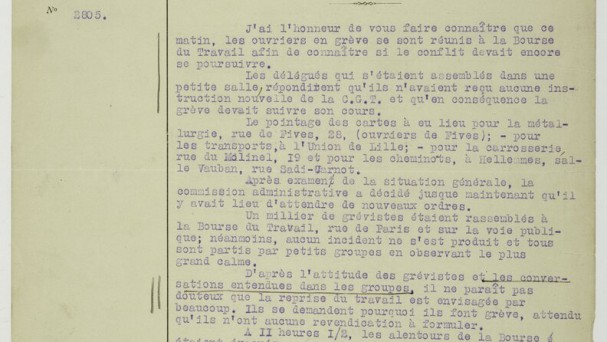
As early as 1918, strikes took place in factories for salary increases. They multiplied in 1919, including on reconstruction work sites. Conflicts also broke out when soldiers or prisoners were employed on work sites which could have employed demobilised personnel.
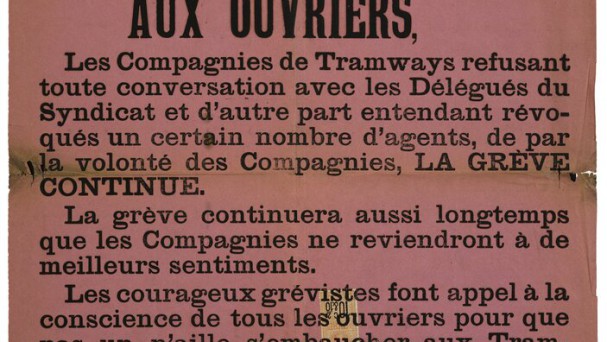
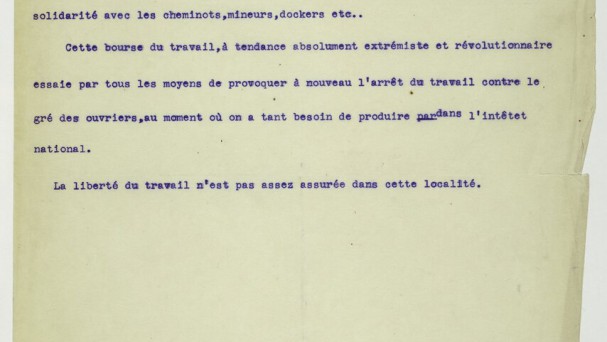
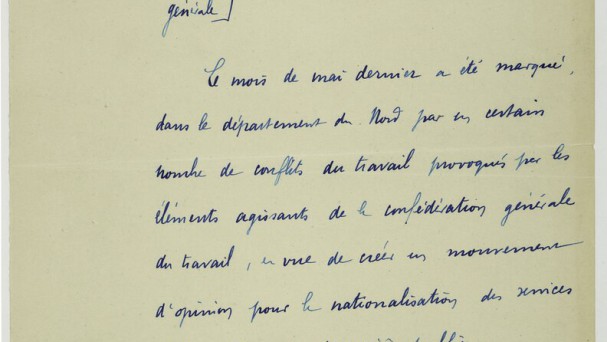
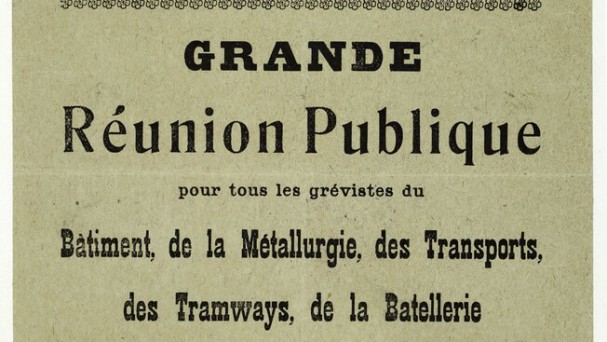
At the end of 1919 and in 1920, the strikes became more wide-spread. In May, the general strike aimed for a deep transformation of society. The C.G.T. (General Confederation of Labour), supported by the S.F.I.O., called for nationalising industry. The strike was particularly supported in transportation: the Lille trams no longer operated, the rue Aubert depot was blocked, and the electric power plant stopped. In Dunkerque, the dockers paralysed the loading and unloading of ships. There were daily calls for demonstrations and meetings. The Internationale was sung.
However, the movement died down, undermined by internal divisions within the worker organisations. In December 1920, at the Tours convention, the S.F.I.O. broke up; and the majority created the S.F.I.C. (French Section of the Communist International) During July 1921, the C.G.T. congress in Lille witnessed the clash, including shooting revolvers, of the partisans of communism and their adversaries.