


-
 Accueil
>
Accueil
>
- 1917-1918, RECONSTRUCTION >
- Reconstitution >
- Reclamation of the land

Reclamation of the land
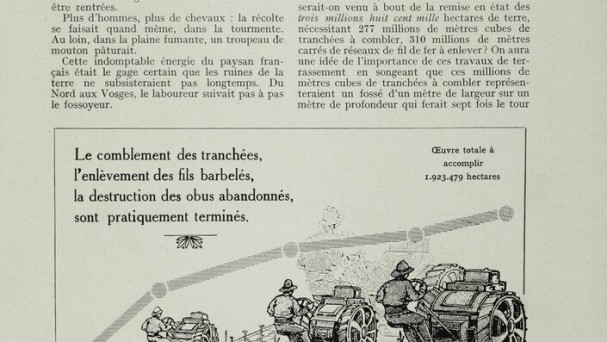
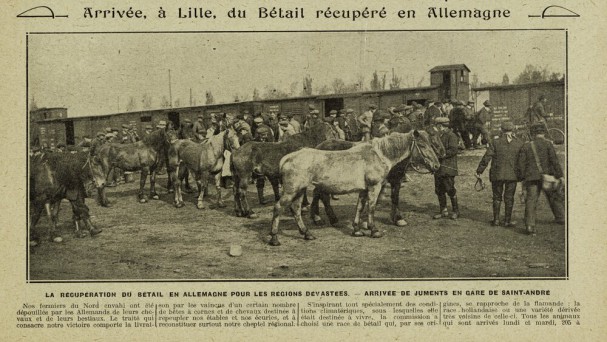
The feeding of the population remained a problem. In 1919, every person had only 500 grams of potatoes and 100 grams of meat available per day and prices were soaring. It was important to return the ground to agriculture. At first, Chinese and German war prisoners were used for demining; they were then replaced by civilian munitions specialists over the course of demobilization. Equipment services and private entrepreneurs were charged with removing barbed wire and munitions; farm owners filled in trenches and slopes. The blockhouses located in the middle of fields were kept as-is and owners were compensated for their loss of land. Fields were ready for sowing as early as spring 1920. Animals were ceded by the Agricultural Reconstitution Office (Office de la Reconstitution Agricole - O.R.A.) to farmers to rebuild their livestock as well as varied agricultural machines. By 1923, it is estimated livestock had reached 80% of its 1912 level and the surface area represented by the main crops had returned to pre-war levels. At the end of the ‘20s, agriculture reached record yields. Former property lines were disrupted by the war and had to be re-established but because of farmer reticence, the opportunity to proceed with a major land consolidation was not taken.