


-
 Accueil
>
Accueil
>
- 1917-1918, RECONSTRUCTION >
- Human Reconstruction >
- Immigration


Immigration
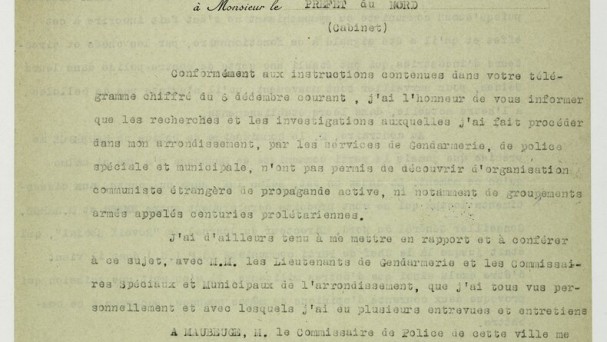
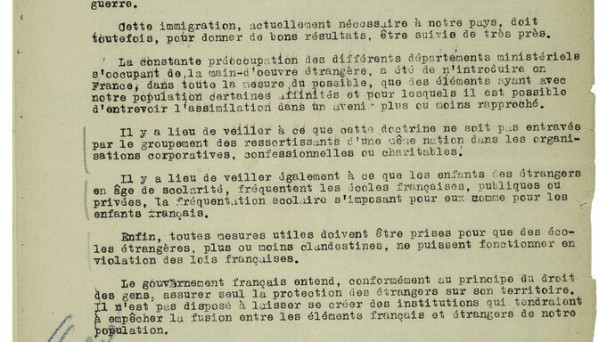
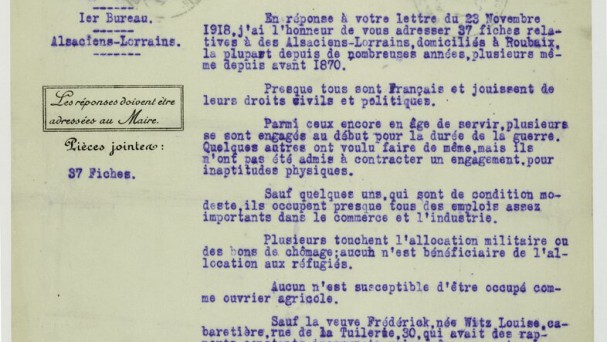
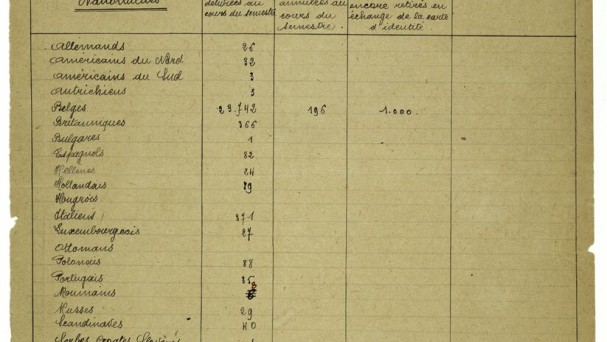
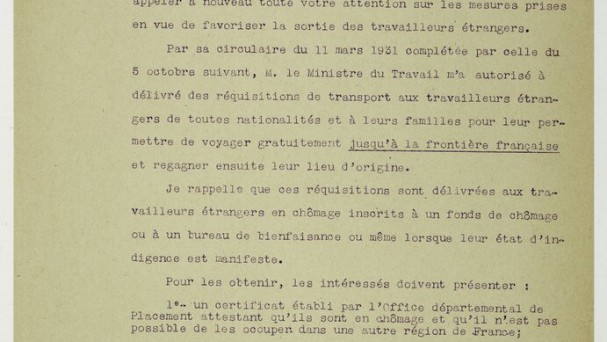
With 192,802 strangers present in its territory, or close to 10% of its population, the Nord department was one where the foreign population was the highest. If Belgians made up the most important group, 71% of strangers in 1926, their number was in constant decrease since 1911, probably further to a large number of naturalisations.
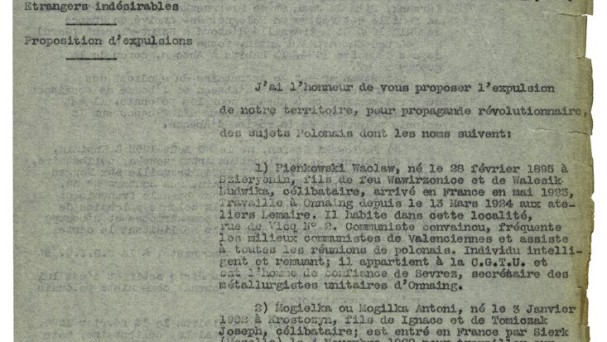
Following the war, the lack of labour incited France’s Central Mining Committee to ask the French government for an agreement with Poland to favour immigration. At 1321 in 1921, by 1926, Poles formed a compact group of 49,581 individuals. Set up particularly in the Valenciennes and Douai regions, the Poles sometimes made up the majority some towns’ population. Ostricourt counted 70% strangers in 1931, mostly Poles. Overseen by the Polish Catholic Mission, they composed rather a closed society around the values “God and Country”.
Another important group were the Italians (9,747 individuals), installed in the greater Lille area and the Sambre River Valley.