


-
 Accueil
>
Accueil
>
- 1916, under German occupation >
- Children >
- The child as the central issue

The child as the central issue
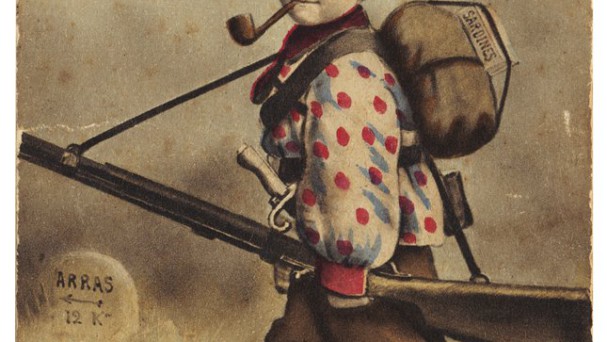
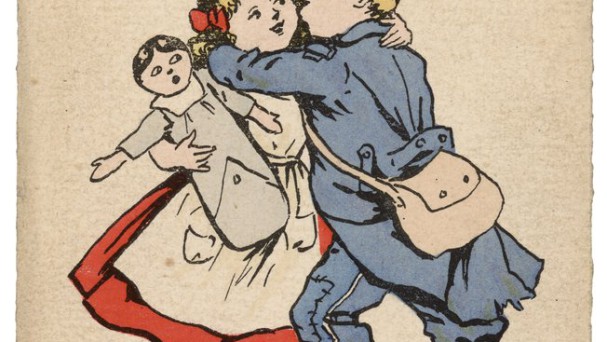
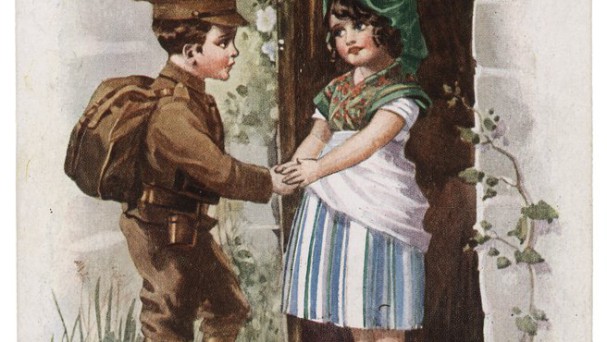
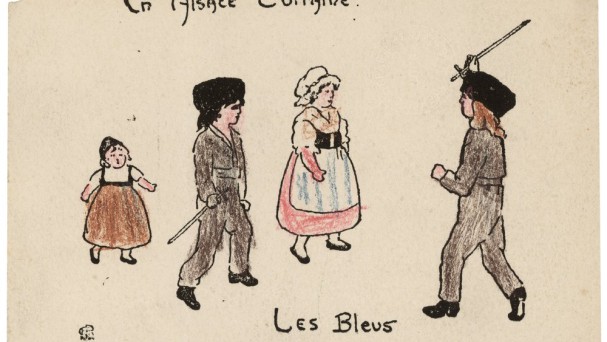
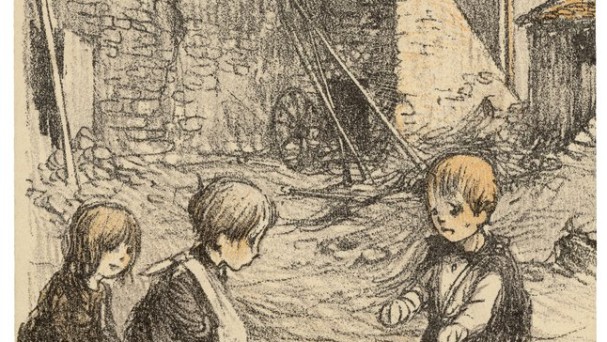
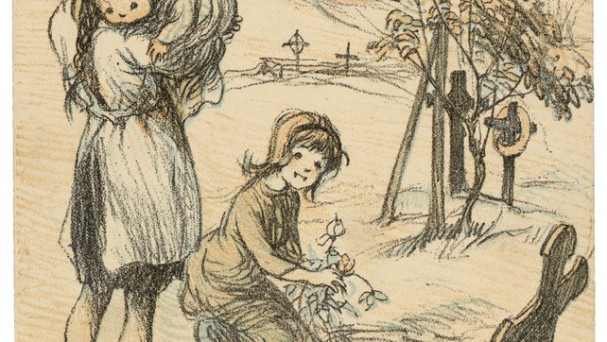
The image of the child was used extensively during the First World War. The postcard offered the ideal medium for reaching the whole of society, soldiers and civilians alike. The themes were the same on both sides of the front. Above all, the child embodied the whole family for whom the soldiers were fighting. But also, through their supposed determination, children were meant to boost the troops’ courage, even to instil a feeling of dishonour in those tempted to give up.
Very few postcards suggested any compassion for the enemy or pacifist sentiment. Two such are conserved in the Nord Departmental Archives. They read: "And do Boche kids kiss their father?" and "A Boche lies here; I’ll leave flowers anyway". It has not been possible, however, to identify their origin or the circumstances of their publication.