


-
 Accueil
>
Accueil
>
- 1916, under German occupation >
- Women >
- Heroines



Heroines
Louise de Bettignies is the archetypal symbol of resistance of the occupied populations and their determination to continue the struggle despite the occupation.
Born in 1880 in Saint-Amand-les-Eaux, into a family of porcelain makers, she was a brilliant student, first in Valenciennes, then in Wimbledon and Oxford in England and finally at the University of Lille.
Being proficient in English, German and Italian, and in view of her family’s financial difficulties, she took positions as a tutor for noble families in Italy and Germany.
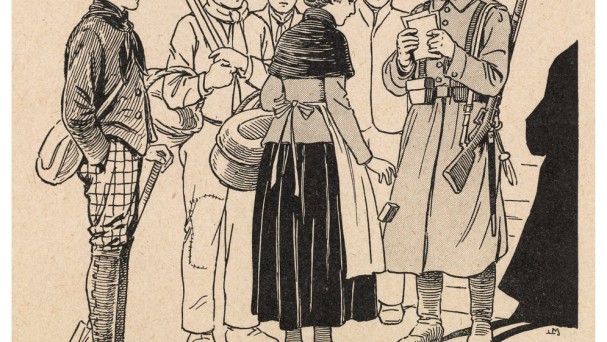
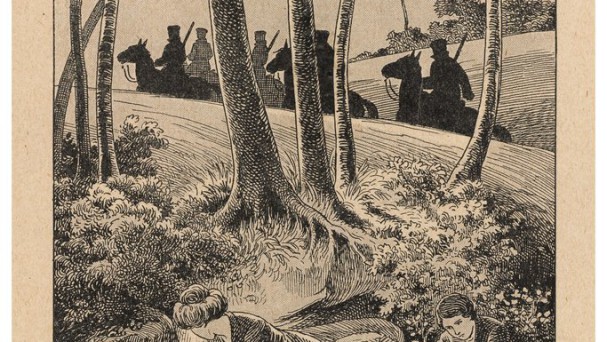
In 1914, she returned to Lille where she and her sister were recruited as nurses in the Red Cross. She soon joined the resistance. In 1915, she was recruited by the Intelligence Service at the British General Headquarters in Saint-Omer. She then organised the Alice Service, a network which soon grew to soon 80 strong. The network was tasked with smuggling men in secret from the occupied zone to England, via Holland, and also to provide information on troop positions and movements, like the imminence of an attack on Verdun.
An associate of Léonie Vanhoutte, she frequently travelled into the occupied zone, Belgium and to the Dutch border.
Léonie Vanhoutte was arrested in Brussels on 24 September 1915 and Louise on 20 October, also in Brussels. The Alice Service was dismantled, resulting in many arrests, including that of Madeleine Berroyer.
On 16 March 1916, Louise de Bettignies was sentenced to death but her sentence was commuted to life imprisonment. She died on 27 September 1918 as a result of pleurisy which she contracted whilst in captivity.
Louise de Bettignies embodies the ideal female heroine. Her middle-class background did not prevent her from engaging in resistance against the enemy. She could have spent the War without incurring any risk. Instead, she became committed from the outset. Educated to a high level and multilingual, she put her talents to the service of the nation. At the beginning of the War, she was a nurse for the Red Cross, the epitome of woman in war, caring for and consoling the soldier. Circumstance converged to make her an icon of a martyred town and department.
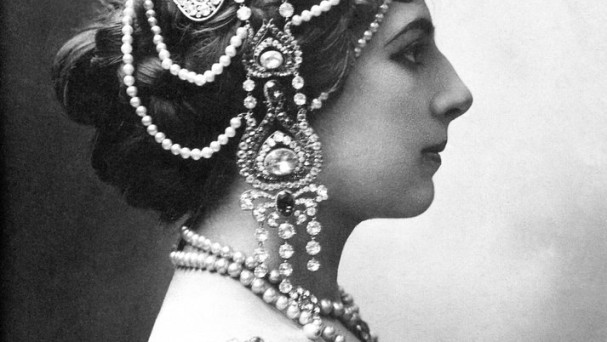
At the other extreme, Mata Hari is viewed as a counter-model. A foreigner, she led a dissolute lifestyle marked by frivolity and nudity.