


-
 Accueil
>
Accueil
>
- 1916, under German occupation >
- Hygiene, health >
- French doctors and German doctors

French doctors and German doctors
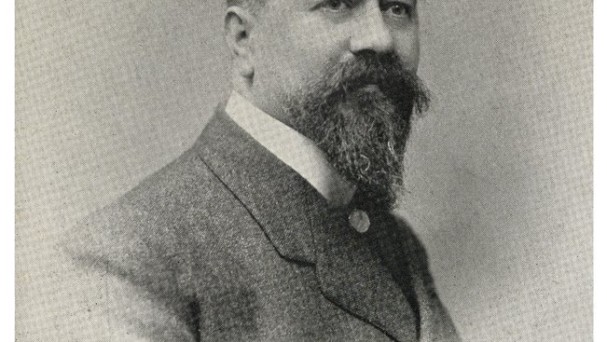
Encounters between German and French doctors in the occupied zone had begun before the War and continued thereafter. It involved figures of very high standing such as Doctor Albert Calmette who at that time was head of the Pasteur Institute in Lille and who, before the War, had worked in collaboration with Robert Koch and the Instituts für Infektions-Krankheiter Robert Koch in Berlin. In 1914, he was visited by the Physician General of the Army and the director of the Berlin Institute.
The elevated social and political position occupied by doctors immediately before the War also explains the power struggle constituted by the organisation of medicine in the main town occupied by the Germans.
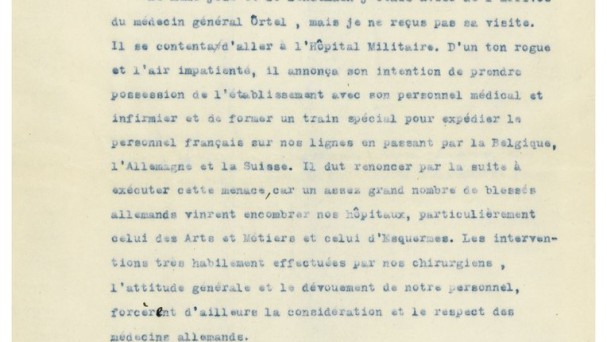
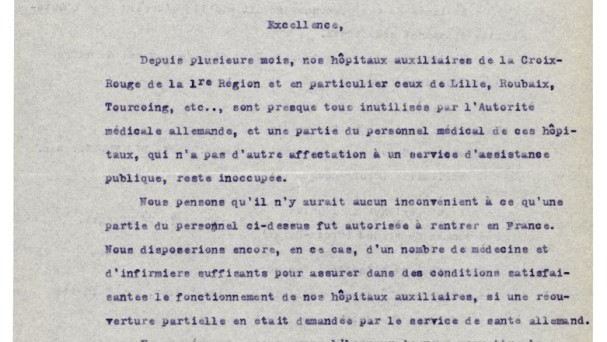
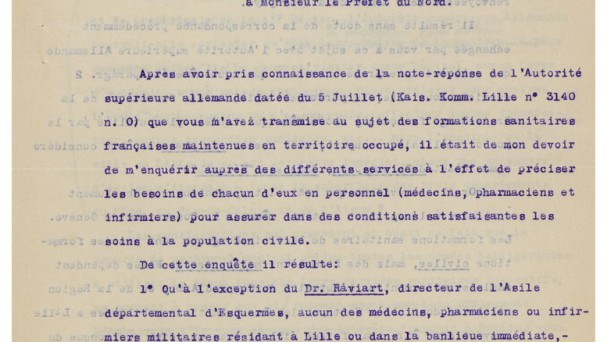
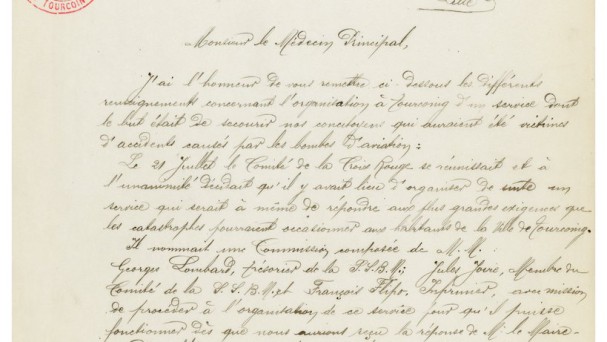
The relationship between German and French doctors fluctuated, strained between the military and civilian demands of the War. Priority was given by the German authority to the care and treatment of German soldiers: hospitals and equipment were requisitioned. The high school in Valenciennes was converted into a military hospital. But there were also common threats to be overcome: venereal diseases, epidemics and typhoid among them.
Albert Calmette and other doctors were taken hostage and deported for several months.
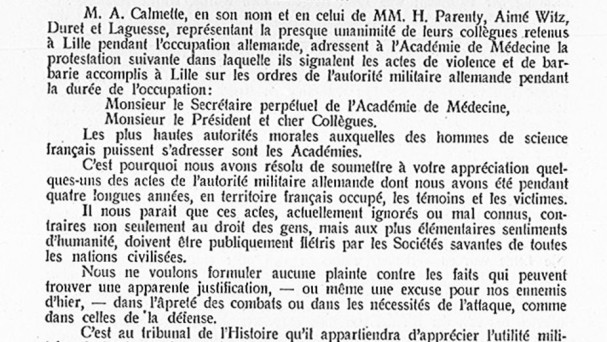
After the War, anxious not to be seen as zealous collaborators of the German authorities, the doctors of Lille lost no time in sending a written protest "against the barbaric actions of the Germans" to the Academy of Medicine.