


-
 Accueil
>
Accueil
>
- 1916, under German occupation >
- Hygiene, health >
- The organisation of the health services and the health status of the populations
Document précédent
Document suivant
Cliquez pour zoomer dans l’image

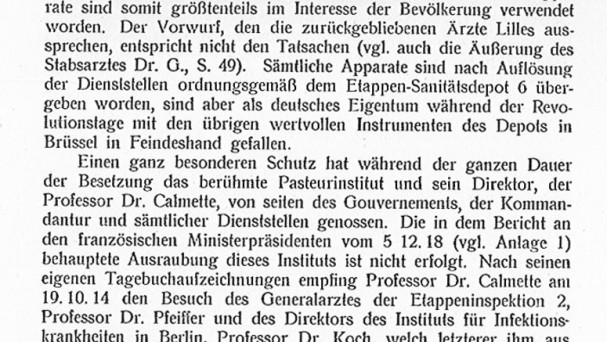
Les médecins allemands à Lille, « Lille, vergewahltig ? », p. 45-47, BM Lille
Traduction française Barbara Durand,
© Archives départementales du Nord pour la traduction.
Les médecins allemands à Lille,
La prétendue confiscation d’instruments médicaux
(p.45-47)
La transcription complète en pdf
Cliquez pour zoomer dans l’image
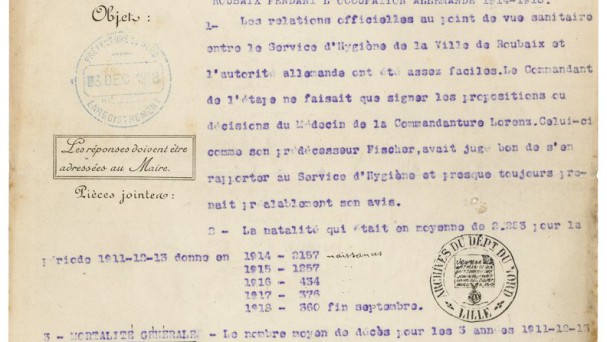
Rapport sur l’état sanitaire de la ville de Roubaix pendant l’occupation allemande 1914-1918 (9 novembre 1918), AdN - M 229/10
Cliquez pour zoomer dans l’image
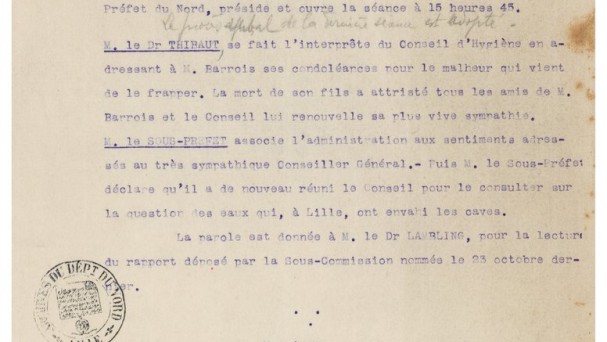
Conseil départemental d’hygiène, séance du 30 octobre 1915 –inclus le rapport du docteur Potelet pour 1915, AdN - M 229/10
Cliquez pour zoomer dans l’image
Rapport sur le fonctionnement du service de l’inspection de la santé et de l’hygiène publiques au cours de l’occupation (1915-1918) par le Docteur René Potelet, imprimé à Lille en 1918, AdN - M 229/10
Cliquez pour zoomer dans l’image
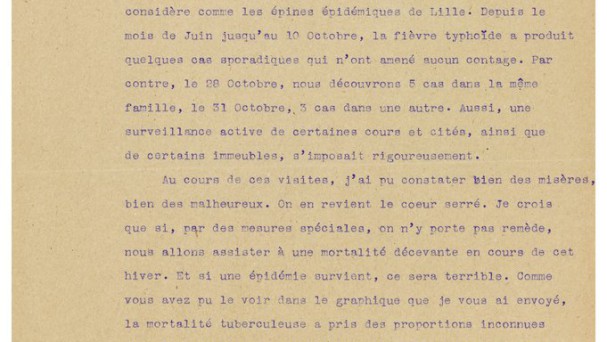
Rapport du docteur Ducamp sur la misère et la tuberculose à Lille (24 novembre 1916), AdN - 9 R 631
The organisation of the health services and the health status of the populations
The health services in the occupied zone were disrupted by two circumstances. First, priority was given by the German army to the care of the wounded. Premises and equipment were used primarily for the care of German soldiers. Medicines and healthcare equipment, which came to be in short supply, were also reserved for the army.
Second, the wartime conditions themselves led to increased disease. In addition to war wounds, epidemics and endemic diseases affected civilians just as much as the German army.
The sanitation situation was particularly dire. The civilian death rate rose considerably during the War.