Document précédent Document suivant
Cliquez pour zoomer dans l’image
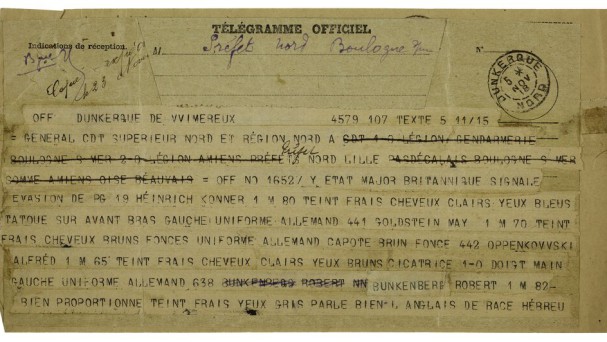
Télégramme de l’Etat Major britannique signalant l’évasion de prisonniers de guerre allemands, 15 novembre 1918, AdN - 9 R 1282
Cliquez pour zoomer dans l’image
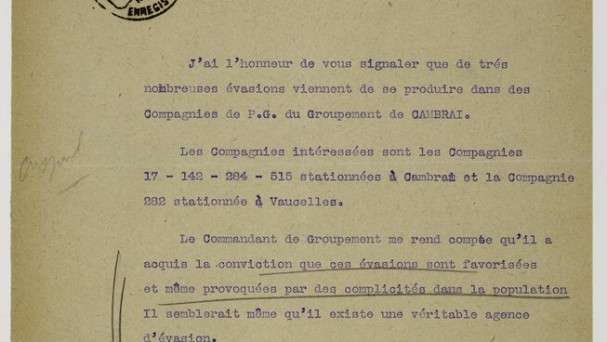
Lettre du Commandant départemenatl des P.G.R.L. (prisonniers de guerre des régions libérées) du Nord au Préfet du Nord au sujet de nombreuses évasons dans les compagnies de prisonniers de guerre du groupement de Cambrai, 15 novembre 1919, AdN - 9 R 1282
Cliquez pour zoomer dans l’image
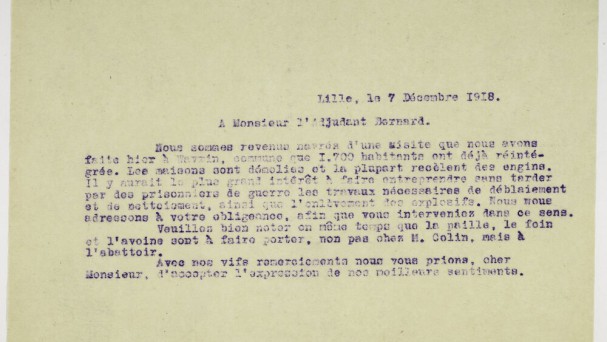
Note à l’adjudant Bernard relative aux travaux de déblaiement par des prisonniers de guerre, Wavrin, 7 décembre 1918, AdN - 9 R 1484
Cliquez pour zoomer dans l’image
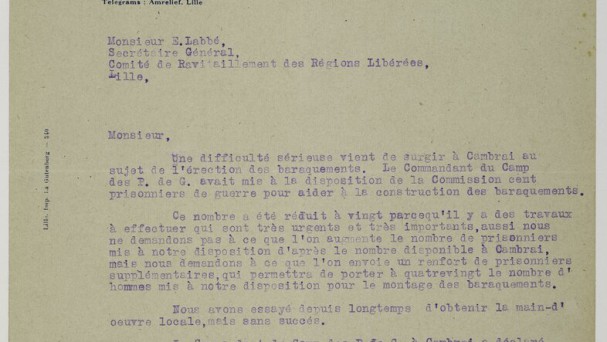
Lettre du directeur de la Commission for Relief in Belgium and northern France au secrétaire général du Comité de ravitaillement des Régions libérées au sujet d’un renfort de prisonniers pour le montage de baraquements à Cambrai, avril 1919, AdN -9 R 1484
Cliquez pour zoomer dans l’image
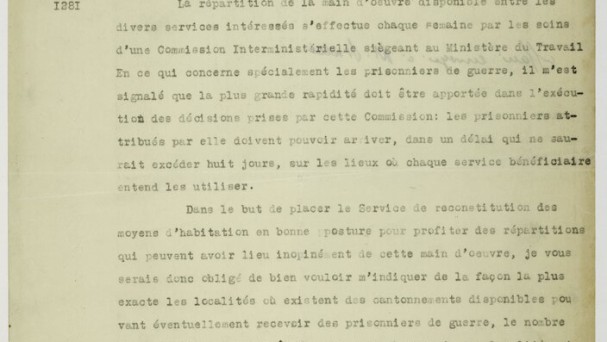
Lettre du Ministre du Blocus des Régions libérées au Préfet du Nord relative à la répartition de la main d’œuvre disponible que constitue les prisonniers de guerre, 5 décembre 1917, AdN - 9 R 1087
Cliquez pour zoomer dans l’image
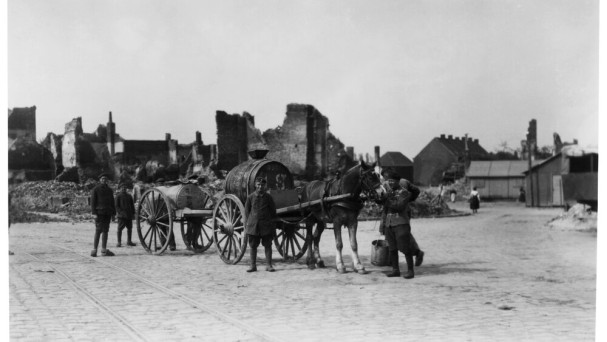
Prisonniers allemands de corvée d’eau, mars 1919, AdN - 15 Fi 1425
Cliquez pour zoomer dans l’image
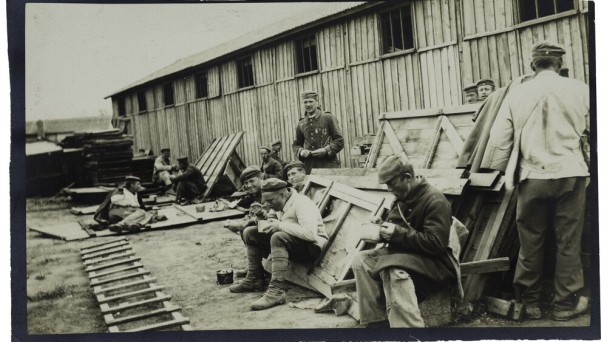
Prisonniers allemands, AdN - 15 Fi 1467

German war prisoners

There were approximately 400,000 German war prisoners during the entire war. The conditions of incarceration were generally better than those of French prisoners in Germany as testified to by the reports of inspections undertaken by neutral countries. However, the Armistice convention called for the immediate repatriation of French prisoners without reciprocity.
The German war prisoners were transferred to liberated regions. They were used as labour to clear ruins, demine agricultural lands, and participate in reconstruction.
But according to Clemenceau they also served as “pedagogical instruments”, a sort of human material to define the chart of German responsibility, as well as a means of pressure for obtaining reparations from Germany.
Isolated from the Allies, France finally accepted the repatriation of German prisoners from January to February 1920 over a period of 45 days.