


-
 Accueil
>
Accueil
>
- 1917-1918, RECONSTRUCTION >
- Reconstitution >
- Communication channels

Communication channels
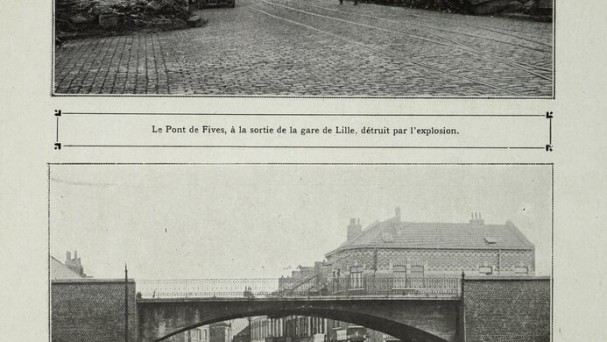
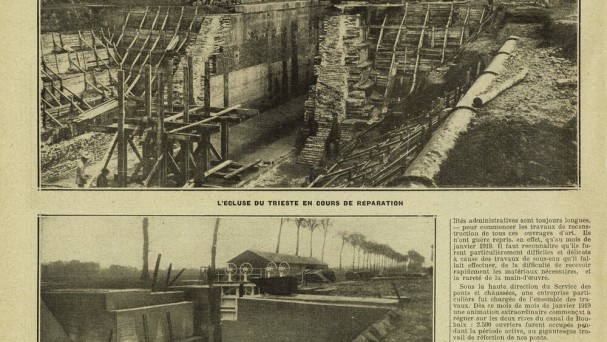
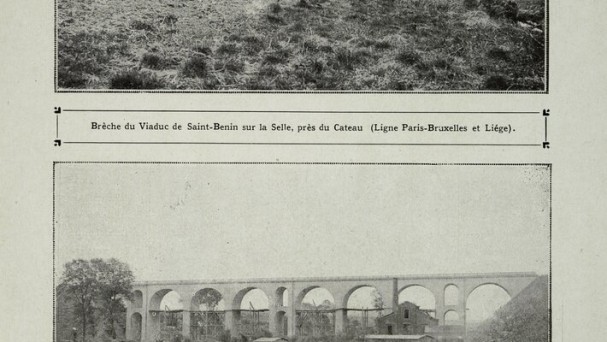
To take the Nord population out of isolation, to guarantee its economic recovery and the transportation of reconstruction materials, it was imperative to re-establish communication means as quickly as possible. The major channels were given priority: national and departmental roads, major railroads, and canals. Temporary bridges were built and followed by permanent ones. In 1923, 7578 kilometres of roads are repaired at least temporarily, and 920 kilometres of railroads are returned to traffic. Canals were reopened to navigation in summer 1919. The last ones (the Roubaix, Lens, and Scheldt canals) were re-opened in 1920. The canals were dug deeper but left at the same gauge. The railroad stations were later rebuilt to replace the temporary shacks. Reconstruction was sometimes used as an opportunity to modernize the network. Before the war, traffic of merchandise and voyagers went through the Fives train station. The Compagnie du Nord decided to reroute all merchandise traffic to the west of Lille and built a new station at Lille-Délivrance, in the Marais area of Lomme. It was appointed with a hotel-home for agents in transit, a refectory and a 825-unit estate for railroad workers with gardens, running water, mains drainage, electricity, schools, a cinema, sports field, public baths, and dispensary. In Valenciennes, in 1921, the Company also built a new estate equipped with a stadium, on the model of Raoul Dautry; each house was surrounded by a yard of 400 to 500 square metres. They also began to replace level crossings with bridges or underground passageways.