


-
 Accueil
>
Accueil
>
- 1917-1918, RECONSTRUCTION >
- Reconstitution >
- Reconstruction of Bailleul

Reconstruction of Bailleul
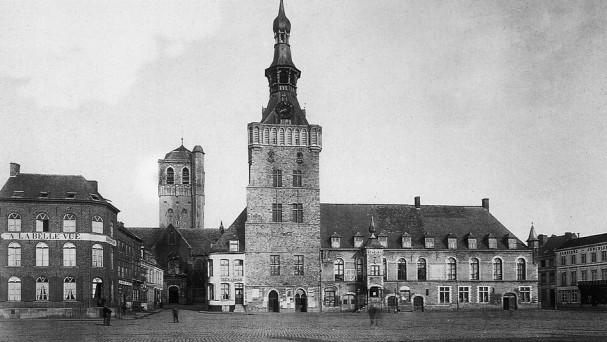
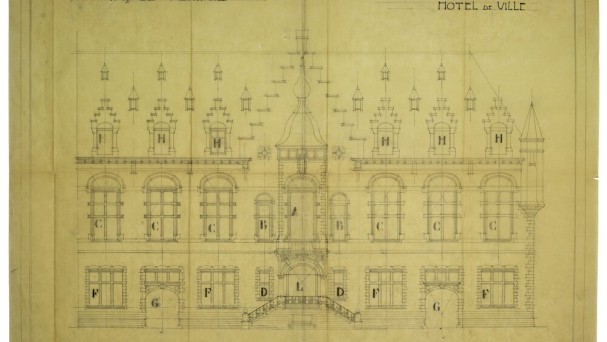
Before the war, the city of Bailleul had some Flemish houses, vestiges of the 15th century and a city hall with a belfry dating back to the same period. The city’s overall appearance was similar to that of many cities in the department: houses with facades facing the streets and gables perpendicular to the roads, a variety and mix of materials used, and the absence of a true architectural unity. As in La Bassée, the reconstruction plan modernised infrastructures: sewers, widening of certain streets, etc. A vast programme of public facilities was launched and resulted in the opening of schools, a middle school, a savings bank, a post office, and a museum. Louis-Marie Cordonnier was placed in charge of rebuilding the city as he was besides for that of cities in the Lys River Valley. He chose a neo-Flemish style which he imposed across the entire city. The facades were in pink or ochre brick and topped by gables. Street signs and logos were also designed by the architect. City hall was, along with the St-Waast church, Cordonnier’s bravura piece. He built it higher and wider than the former, larger than life. Like a theatre set, the city was to be a model albeit artificial and imaginary, but in compliance with its author’s Barresian nationalism.